






















Dear Father Gabriel,
I have to confess something I did when I was a student at Saint Raymond de Penafort. A few things, actually.
I lied during confession. A lot. I never took my mom’s car out for a joyride, or stole that box of Sour Patch Kids from that Walmart. In fact, the only thing I stole was an extra piece of the body of Christ during communion. Mass was always right before lunch, can you blame me?
Also, I would always skip at least four beads when praying with the Rosary. I was a 10 year old with undiagnosed ADHD and a habit of fixating on anything and everything unimportant. Is that really my fault?
Oh, and I’m not actually a Catholic. Yeah, you preached to me for 10 years and my parents spent $100k on tuition for a Catholic school, but all of the cool kids jumped ship to Protestantism, so I had to join the bandwagon. Obviously.
Phew. It feels good to get all that off my chest. If only there were some way for me to confess my sins to a priest more often … maybe like some sort of — I don’t know — confession?
Too bad that doesn’t exist. Oh well. See you next mass!
God bless,
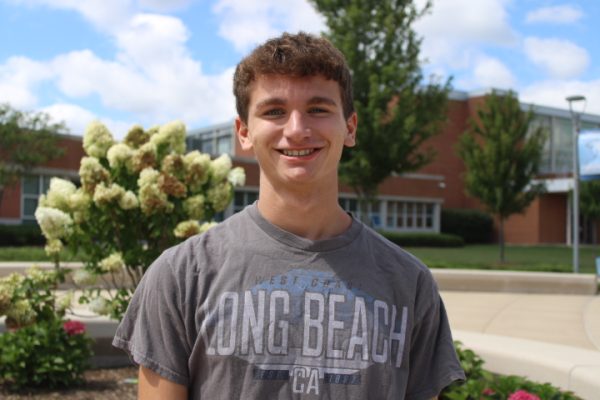
Xander Adkins
Unlike my very real letter to Father Gabriel, my reasons for switching from Catholicism to Protestantism (non-Catholic Christianity) are … very not real. All I knew when making “the switch” was that Catholic churches don’t allow women to be priests (which my mom was less than thrilled about) and that a cross would look cool on my chain.
Needless to say, I did my research.
However, I’m not the only one who grew up Catholic and switched to a more heterodox view of religion later on. According to a study by the Pew Research Center in 2025, 35% of adults in the U.S. currently identify with different religious views than the ones they had growing up, with the majority of those being shifted from Catholicism to either Protestantism or atheism. Also, for every one person who joins Catholicism, over eight leave.
According to Population Education in 2024, Christians make up 31% of the global population. With over 2.5 billion members worldwide, identifying as a general “Christian” narrows down the received stigmas from others due to the thousands of denominations within Christianity. Introducing yourself as a “Catholic” opens the door to much more criticism from atheists and Protestants alike, which is something that many former Catholics — myself included — don’t want to deal with.
As someone who went to a Catholic school for the first 13 years of his life, I’ll be the first to tell you that I’m not surprised that so many have left the wonderful religion of St. Ray’s. Like any religion, Catholicism has issues, controversy and negative stigmas that have made many want to detach from it.
Many of these controversies stem from the fact that Catholicism is a denomination that trends toward conservatism, and Mount Prospect is very much not conservative. After all, they don’t call Illinois a “Blue State” just because we’re next to Lake Michigan. While some Catholic branches are more conservative and others liberal, the opposition of abortion, stances against transgender rights and inability for women to be ordained as priests (so that’s what my mom was talking about) are rudimentary views that make up the foundation of Catholicism.
Additionally, a poll gathered by Baker Institute in 2024 found that roughly 55% of all practicing Christians align with more conservative views.
Oh, and did I mention that 50% of Christians are Catholics? I’ll let you figure this one out for yourself.
The unfortunate reality is that Catholics and Protestants alike get so caught up with the politics of their denominations that more debate happens than preaching. Or praying. Or literally anything else. Public Clerical Association Franciscan Missionaries illustrates this perfectly when they say, “A conservative might focus more on the Church’s teaching against abortion and contraception while ignoring her teaching on collective responsibility to provide justice for the poor … [whereas] a liberal might focus more on the Church’s teaching to care for the poor while ignoring the Church’s teaching on abortion.”
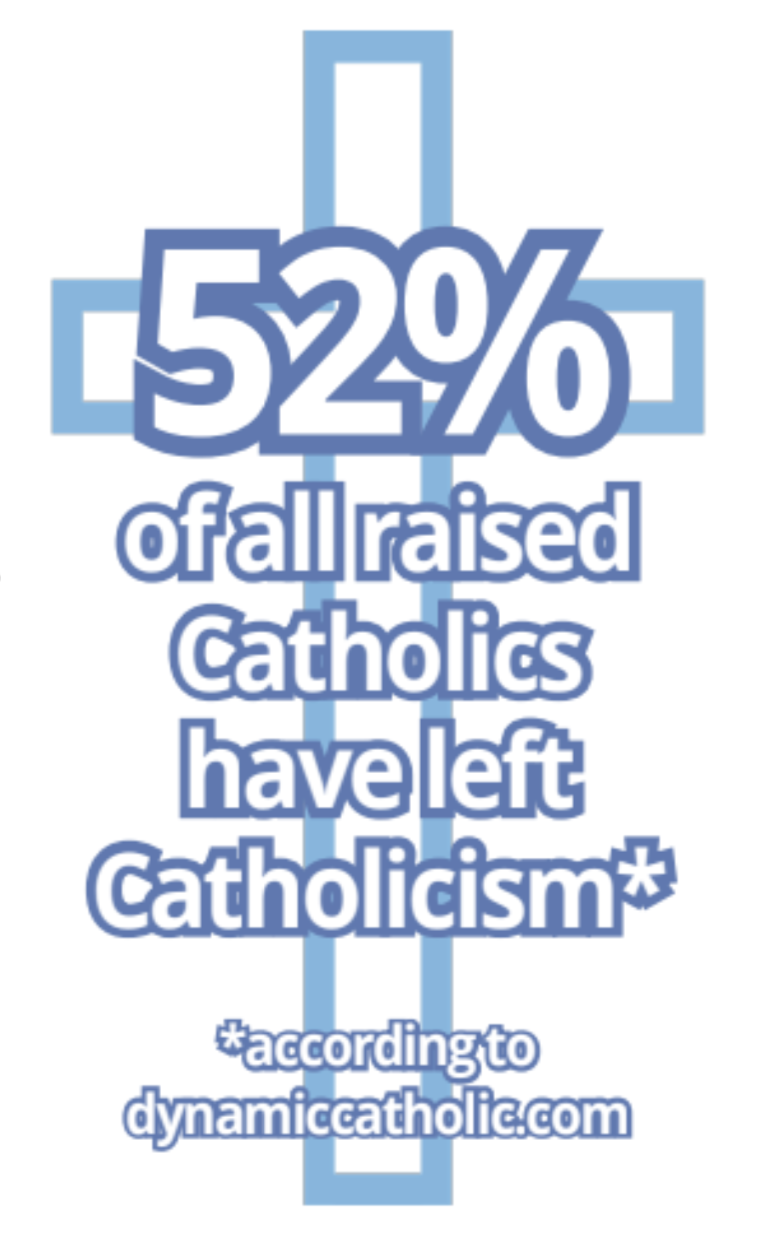
One’s perspective of their religion, whether that be within or without the dominions of Christianity, is usually shaped and determined by how they identify themselves politically and ideologically. It matters less what the Bible and teachings of Christ tell Christians and more how they interpret those words and use them to form, and oftentimes justify, their views and actions. Unfortunately, this often causes religious practitioners to abuse their power in a way that neither conservatives nor liberals wish to see.
As the founder of World Religions classes in District 214, part of John Camardella’s job is studying every detail of Christianity, even the disturbing ones.
“The Catholic Church has had to deal with some really hard scandals [like] sex abuse, with the hundreds of priests that have been accused of sexual abuse,” Camardella said. “Over the years of me teaching here, I’ve had some Catholic students who have come to me, most of them confidentially, asking me what I think about the [scandals] and how I deal with it [in my class]. I don’t address it in the curriculum, but I’m always willing to listen to students and their concerns.”
As mentioned by Camardella, the shocking number of sexual abuse scandals within the Catholic community is truly disgusting. Research database EBSCO lists over 10 major scandals within only the past eight years, with each case involving up to hundreds, if not thousands of underage victims who have been trafficked, assaulted and otherwise sexually abused.
Cardinal George Pell, the third-most powerful man in the Vatican, was convicted of sexual abuse against two choir boys in 2018.
I was a choir boy in 2018. Those boys and I sang the same songs. We preached to the same Lord. Lived the same lives.
For all intents and purposes, it could have happened to me.
My purity taken.
My faith destroyed.
My life ruined.
Despite this, I would never blame Catholicism for the actions of its “followers.”
“People have been using religion to excuse their actions since … well, forever,” Camardella said. “Because religion is fundamentally protected in the United States within our First Amendment, it allows people to take advantage of the power that gives them, whether that be [through] tax breaks or abuse. There is much more lenience because it’s harder to say something is necessarily illegal when it’s claimed to be done in the name of whatever religion.”
The prevalence of childhood sexual abuse in the Catholic Church is tragic, but it’s not something I and every one of the 1.4 billion Catholics worldwide should be put under scrutiny for. Labels make it much easier to judge one another. Whether those labels identify a religion, political view, sexuality or anything else does not matter. What matters are the assumptions others jump to when they learn little about someone and use that as a basis to judge their entire character.
In Mount Prospect and its surrounding areas, religious labels typically lead to positive, yet equally dangerous, assumptions. Being aware of this presumption is so important in the study of religion that Camardella illustrates it with the same example in every one of his lectures.
“If someone walked in and I put my arm around them right now and I said, ‘This is a deeply religious person,’ what might you think if I said that about somebody, with nothing else. Would you think ‘good’ or ‘bad?'” Camardella said. “You [might] think ‘good’ because most people around here see religion as ‘good.’ But that deeply religious person could be a member of the KKK. That deeply religious person could be a member of Al Qaeda or ISIS. They could be a Buddhist monk in Myanmar who is committing acts of genocide against the Rohingya Muslims. All deeply religious people who take their beliefs to violent ends.”
I hate being labeled. I hate when others assume things about me just off of one detail. I hate that the entire reason I now identify as a Christian instead of a Catholic is solely because of those assumptions. But the thing I hate the most? The thing that affects everyone, whether they’re religious or not?
The anguish that labels create are far from exclusive to just religion. Much like how debates within denominations of Christianity are just politics with a religious overlay, religious labels are no different from their non-religious counterparts. They’re just that: labels.
“If you say ‘I am this,’ then you have to accept all of the stuff that comes with what people assume about that identification. [Yet] I have found that a lot of young people don’t want to be labeled,” Camardella said. “There’s some things kids are conservative about, and there’s other things kids are liberal about. There’s things that they agree with Christianity about, but there’s things they disagree about. There’s fluidity.”
Don’t be afraid to identify yourself with something just because others have dragged that label through the mud. I can tell you firsthand that it sucks to be judged for the actions of others, but persevering through these stereotypes is how to make them disappear. Just like how I never really quit Catholicism just because of it’s negative reputation, you should never be ashamed to identify yourself with your beliefs, even when it’s hard.
No, especially when it’s hard.
“I respect what students think and believe. My job in this teaching position is to help them wrestle honestly with what’s out there in the world,” Camardella said. “It’s about supporting one another.”
Never miss important news: every Monday, get a preview of what’s going on this week at Prospect, and what went down last week. To sign up for the Knight Notes newsletter, click here.