









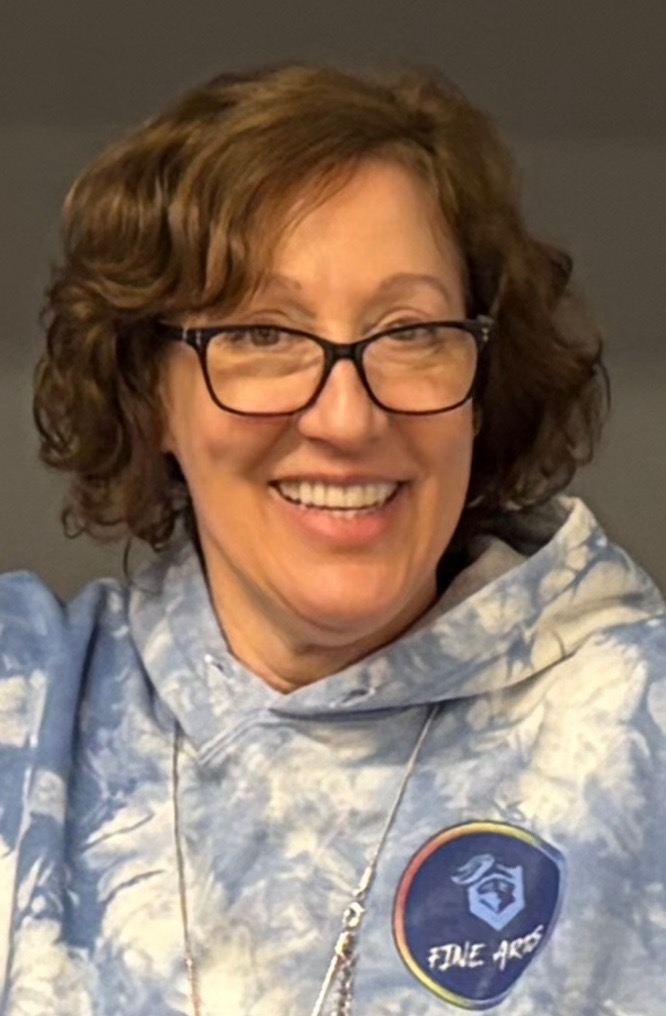




















It was a day much like any other for 1992 Prospect alumnus Seth Brady. A social studies teacher at Naperville Central High School, he was teaching his fifth period class when a substitute teacher, a department chair and principal Jackie Thornton came down and pulled him out of the room, asking only that he follow them.
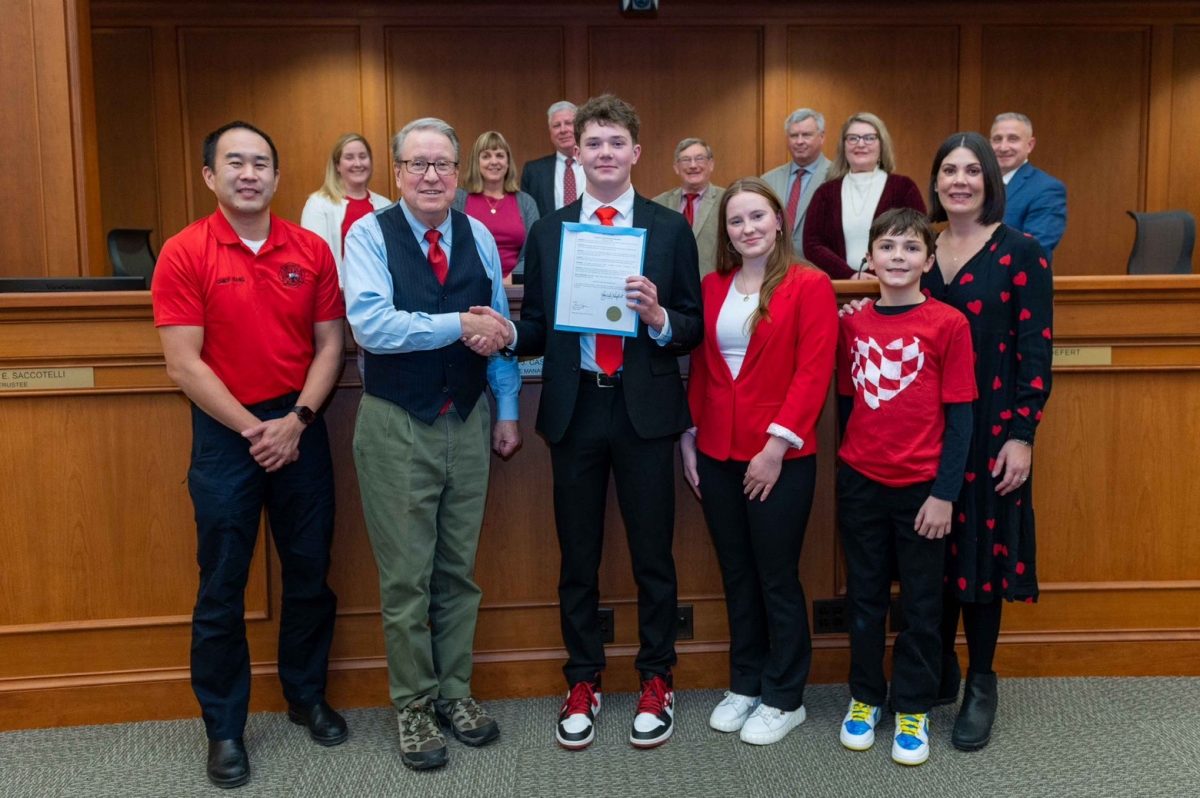
Once in the common area, Brady was greeted by a crowd of students and colleagues, as well as some of his family.
As it turns out, Brady had been named Illinois Teacher of the Year on April 16.
“I was pretty stunned,” Brady said. “I got about halfway down the hall and … I said, ‘Wait, is this actually happening?’”
Brady didn’t always intend to teach, though. He originally earned a Bachelor’s degree in Anthropology and Philosophy as well as a Master’s degree in Social Science of Physical Activity at the University of Illinois and graduated in 1998 to become a survey researcher.
After the events of Sept. 11, 2001, the tense sociopolitical environment created an exceptional need for students and citizens alike to be informed as much as possible, and Brady realized he had the skills to step up.
“I sort of saw a place for myself as an educator,” Brady said.
However, that wasn’t the only reason he decided he would be a social studies teacher. Brady has been fascinated by cultural variety around the world since his early childhood in Badaxe, Mich.
He was in sixth grade when a Peruvian exchange student named Dayana visited his class during their Latin America unit to deliver a presentation about her daily life. Brady was especially taken with how different their lives were.
“Her ordinary life made me realize [that] if I had grown up next door to Dayana, I would have been a lot more like her and vice versa,” Brady said.
Moments like these made him realize not only the extensive difference between nature and nurture, but also how that difference is reflected in himself. Brady noted how much of his own identity was shaped simply by growing up where he did and not somewhere else.
“We become [mainly] what’s poured into us,” Brady said.
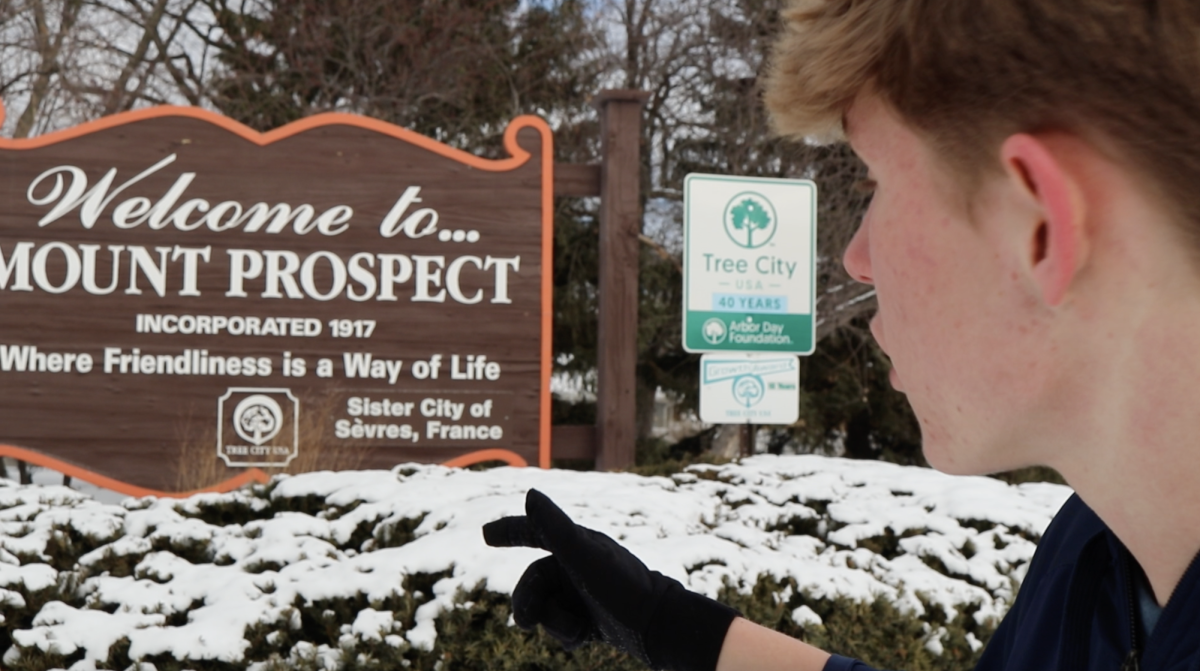
A big portion of what was poured into Brady came from his time at Prospect.
“It just remains in my memory as a place where you could be yourself and be supported and nurtured by the faculty,” Brady said.
One particular teacher who stood out to Brady proved to be a powerful source of inspiration and continues to serve as a role model he follows today. Barbara Fryzel, who taught English at the time, broke the mold with a powerful approach to motivating students, according to Brady.
“When everyone’s in rows and … quietly writing … she would crouch down and get eye-level with me, and you know, as a 15-year-old, it’s like ‘Dude, you’re way too close,’” Brady said. “But [then] she would just start laying down the compliments. She’d be like, ‘Have you ever thought about being a writer? Do you know how creative and smart you are?’”
These kind words meant the world to him.
“Those compliments became transformative in [that] it’s like you [really] only need one or two really good compliments to carry you through your life,” Brady said.
And carry him they did. Today, following Fryzel’s example, Brady incorporates individual student freedom and agency into his teaching methods by ensuring they feel supported and confident enough in their own ability to advocate for change.
“To give a compliment actually requires quite a bit of vulnerability in [both] the complimenter and the complimented,” Brady said. “I think [it’s important] to not be afraid to be vulnerable, to just lay out all of the good things that you think about a particular student.”
In fact, Brady structures his entire teaching strategy around growth and impact rather than grades and test preparation.
“So much of school these days and probably then too was very transactional; [I pay students] in points for [their] work,” Brady said. “But with her style of teaching, she gave so much in terms of feedback and gave so many opportunities. That mastery[-based] orientation and having someone on your side as you work towards that [mastery] is the Barb Fryzel legacy that lives on.”
Modelling himself after her ideals of support and reinforcement, Brady worked with the U.S. Department of State in 2013 to create a program titled “Teachers For Global Classrooms,” which is designed to help teachers infuse global education across their curricula.
Students were also enlisted to join the effort, but to the teachers involved, they weren’t just students; they were equals. They were just as involved in discussions and able to advocate for themselves. One, Brady said, would even go on to give a testimony in front of the U.S. Senate.
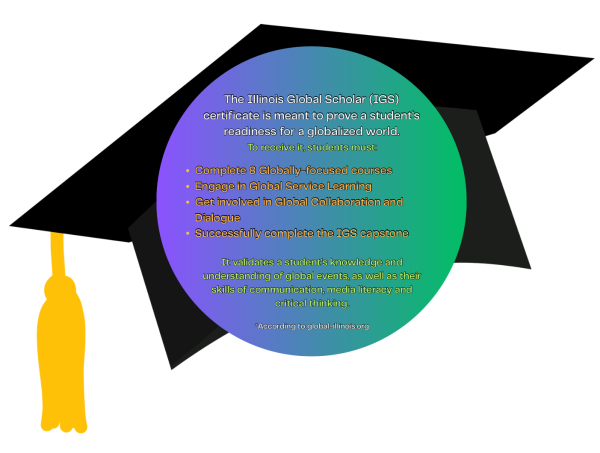
Soon, they would get a law passed establishing the parameters of the Illinois Global Scholar Certificate, along with funding for global education as a whole.
Brady now teaches the Illinois Global Scholar Capstone course at Naperville Central in which students work on a semester-long project that has them take on issues elsewhere across the globe. Their goal is simple: to make an impact. To do that, they conduct thorough research and reach out to on-site experts.
In 2017, one of his students, then-senior Vicki Hurd, designed a video game where the player assumes the role of a doctor amidst the ebola outbreak. Following the “choose-your-own-adventure” format, students had to make crucial decisions given certain information that would either aid or worsen the situation.
Hurd’s willingness to go above and beyond is exactly the kind of quality Brady hopes to cultivate in the classroom.
“It’s pretty crazy to [watch] the growth that happens in a student and seeing that agency develop,” Brady said. “You can just see them realize that they can do more than they ever thought they could.”
As of now, students like Hurd have passed a total of seven laws, with another in the legislature potentially on the way.
Recently, Brady worked with John Camardella, Prospect’s World Religions teacher, to establish religious literacy standards.
“[Brady’s] brilliant. Absolutely brilliant,” Camardella said. “[He] really showed me what’s possible in moving the needle; pushing the boundaries of what’s possible in a public school.”
He was ecstatic to find out that Brady had been recognized.
“I immediately texted him,” Camardella said. “[Brady] is a dear, dear friend of mine.”
At the heart of it all, Brady’s goal is to teach students how they can make changes in the world right now. He looks past the reputation teenagers may have and sees in them a desire to learn and act.
“I think it’s so critical to establish trust, [to] establish myself as a supporter [and establish that] you as the student teach me things and we learn together,” Brady said. “Your success is my success, so if you don’t succeed, that actually keeps me up at night.”
Brady’s mindset is one of hope and adoration for what students can accomplish.
“I believe in my heart and soul that if you find ways to set teenagers free,” he said, “they will do amazing things.”
Never miss important news: every Monday, get a preview of what’s going on this week at Prospect, and what went down last week. To sign up for the Knight Notes newsletter, click here.


![TEAM SPIRIT: A cheerleader throws their pom-poms above their head. The anonymous ex-cheer student loved cheerleading, but felt her environment was too toxic to continue. "I was just so scared of this coach," she said. "[I was scared of] the constant yelling at us and the way it was very much like, 'You're replaceable.'" (photo from Canva)](https://prospectornow.com/wp-content/uploads/2026/04/Purple-Pink-Dark-Mode-Pictogram-Gender-Equality-Social-Issues-Instagram-Post-e1775594453495.png)