
























































If you’re a girl, you’ve probably been called a bitch before, whether it was a guy in your seventh grade class that you wouldn’t give answers to, or your ex-boyfriend that asked another girl to be his Valentine a day after he told you he still loved you.
Maybe you were running and a group of boys yelled “fat bitch!” at you.
All of these are true stories girls shared with me. I surveyed have experienced. The word is all around us. At the slightest inconvenience, at the slightest annoyance, a girl can be a victim of this word. I’ve said it, you’ve said it, but we’ve never really talked about it, or considered its impact.
So why is this word so normalized? Why is it acceptable and casual to use in conversation when it’s deeply rooted in sexism?
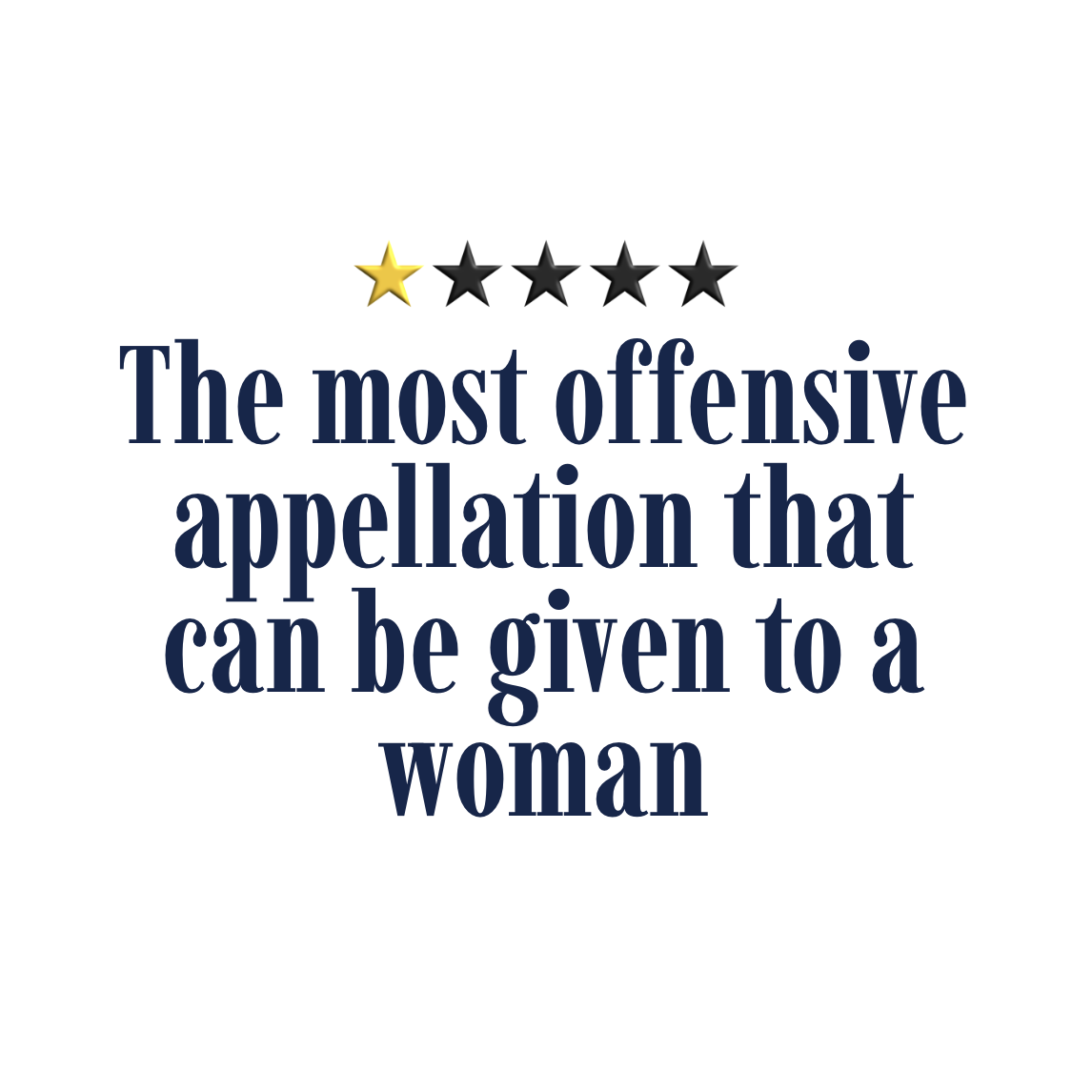
According to The Revival Zine, iIn the 15th century, the word started to become used similarly to the word “slut,” another word that attempts to degrade women. By the 18th century, the word had become so powerful, that a British lexicographer named Francis Grose’s book, “Dictionary of the Vulgar Tongue,” described the word as “the most offensive appellation that can be given to a woman.”
And in the 1900s the word was used by men to describe “annoying” women. (Of course, to be considered annoying, a woman must reflect qualities praised in men). According to an article titled “Stop Calling Women B*tch,” Grace Jensen wrote; “I realized “bitch” wasn’t just an insult because it meant promiscuous, bad-tempered, and sleazy; it was also an insult because it meant ‘woman.’”
So essentially, being a woman is inherently insulting, and femininity is to be frowned upon. And words like “promiscuous” are correlated with the female gender.
One thing I can’t understand is why women are shamed and ridiculed for partaking in the same experiences men take place in, but instead of a high-five and a “let’s go broo!!” they get dirty looks and slut-shaming comments.
And why do women get called “bitch” when they are confident, or self-assured, or demand more, while a man who does the same, just “knows his worth” and is applauded for having such an assertive attitude?
There have been so many social advancements for women because of feminist movements, but this word has managed to outlive all of them, and its lasting impression has continued to harm those who fell victim to it to this day.
“[A guy I was talking to] asked me to send nude pictures of myself,.” aAn anonymous sophomore girl said., “Naturally, I said no. He then called me an ‘ugly bitch’ and said he was just trying to be nice and that no one else would ever want me.” “I think he called me a bitch because he was embarrassed of getting rejected.”
“I don’t think he realized how much something like that can hurt someone.I think that guy was immature. I think time has shown that he was wrong… I think about it and other similar situations often.”
Who knew that this word that is used daily by people all around us, in school, at home, at hangouts, and online could have such an impact?
Call a girl a bitch once and she’ll never forget it.
We all know girls are usually the targets of the word, but what about men and the word? John’s a “little bitch” because he won’t jump off the high dive at the swimming pool, and Chris is “bitching out” because he didn’t get a good grade on his math quiz, but why are they being tied into the word if they aren’t women?
Men can sometimes experience the aftereffects of the word if they are demonstrating unpleasant feminine behavior or qualities. When a man is called a bitch it means he is weak, or emasculated, and to be “bitchy” is to be whiny, annoying and burdensome.
“A girl is a bitch when she insults others for her own gain…[it] is a word used to insult the female gender,” freshman Ethan Block said. “Bitch is used negatively to bring others down and used to insult women for being annoying.” I
“I believe bitch is an intense word;, guys shouldn’t be able to say it.”
And he’s right: a word directed at women should only be used by women.
In recent years, the word has been “reclaimed” by women, sparking terms like “boss bitch,” and “bad bitch,” both terms being used as phrases of endearment. “Bad bitch” refers to a confident and self-respecting woman, and rejects the traditional sexist definition of the word, by highlighting the confidence aspect of it.
“Boss bitch” relays a similar message: the phrase is defined by a woman who is ambitious and independent, a woman who unapologetically takes charge of her life. And honestly, I have mixed feelings about this. Because in reality, the word is still naturally misogynistic, but I mean, if it’s used to empower, then I suppose I’ll let it slide.
It’s important to look at the full history of the word to truly understand its impact and effects. The word “bitch” is constantly circling and exiting the mouths of girls and guys all around us, and without any action, it will continue to do so.
If you’re using the word with negative connotation, or your intent is to harm or degrade, just don’t say it. There’s other ways to express your anger toward a person without being a sexist jerk!














Anonymous • Apr 9, 2026 at 9:22 pm
Emma • Apr 9, 2026 at 8:14 pm
OMG TS WAS SO GOOD I WOULD RECOMMEND TO ANYONE WHO CAN READ. I WILL NEVER BE ABLE TO LIVE THE SAME AGAIN. I AM A CHENGED PERSON.