


















































I hate sidewalks. Not because they’re bland or jagged, but because every third step I take my foot lands on a crack. I try to adjust my rhythm or modify the length of my stride just to quiet the hum of numbers marching through my mind, but the second my brain catches a pattern, it drowns everything else out.
For a long time, I never considered the fact that not everyone battles with pavement, that apparently some people can just walk.
The day I was diagnosed with ADHD was the day I learned not everyone hates sidewalks.
Finding out I had ADHD wasn’t a simple process; it was multiple appointments over the span of two months, only one of which was the day I was tested.
I don’t know exactly what I expected as I walked into the bitterly cold testing room about the size of a closet. Whatever it was didn’t come close to the reality of it.
After my eyes had finally adjusted to the fluorescent lights that paired uncomfortably with the pure white painted walls, I was tasked with three hours of juvenile puzzles and a packet of questions.
I waited the next two weeks for a 10- minute conversation that would change my life — or at least I thought it would. I guess it wasn’t the turning point you see in the movies: there was no cinematic pause, no dramatic lighting or swelling music … just a black leather chair squeaking under my knees and a long string of complicated words to sum up four simple letters.
My diagnosis didn’t cure me, but at least now I know why I hate sidewalks.
I just wished someone had noticed sooner.
For as long as I can remember, my ADHD traits have been brushed aside and labeled as a part of my personality. There were no comments scribbled in the corner of my report card, no doctors suggested testing — forgetting my phone everywhere just became “my thing.”
I was the first to suspect I was different, wedged one day between the chip aisle and a line of people also waiting for their COVID vaccine at my local Walgreens. The line moved at a sluggish pace as I thumbed at my phone, scrolling on TikTok for some kind of distraction to keep me from thinking about the giant needle that was about to prick my arm.
Then I saw it. It was a short video depicting attributes associated with ADHD. Despite its length, it had lasting effects on me — seeing that video was the first time I felt like I understood myself.
The truth is, it’s easy to see yourself in a 30- second video that’s intended purpose is to be relatable. I did. But I also knew that a relatable video is not the same as a clinical disorder.
For me, that video sparked a question I had never thought to ask, but it was in no way my answer.
Instead of closing the app and moving forward with a self-diagnosis, I began to research and pay attention to little patterns in my life that didn’t fit within a video caption. It wasn’t until I stood up from that black leather chair that I knew for certain.
But with social media, self-diagnosing has become an epidemic developed with popular music clips, bold captions and a comment section that fuels the fire. Platforms that thrive on quick clicks have molded complex conditions into aesthetic content.
When a serious neurodevelopmental disorder is flattened into digestible media, it’s natural to relate to a quick and surface-level account of juggling 10 missing assignments and daydreaming in a boring class.
Yes, short-form ADHD content can spread awareness. But it can also perpetuate stereotypes and disseminate misconceptions about an intricate condition. Even worse, it takes a disability and turns it into a quirky personality trait.
It would be convenient to blame social media for these harmful stereotypes, but the truth is, their origin runs much deeper than a comment section — they’re rooted in the early research that has shaped our basic understanding of ADHD.
According to a 2019 article from the National Library of Medicine, girls are far less likely to be diagnosed and treated, since early studies were primarily conducted on male subjects. This caused their data to be skewed towards behaviors more commonly found in boys with ADHD, such as impulsivity and hyperactivity.
The biased way ADHD is perceived makes it easy to get diagnosed if you’re disruptive and loud, but it leaves girls with ADHD, who are typically more inattentive, to struggle quietly. That narrow image leaks into society and cements itself as all ADHD can ever be.
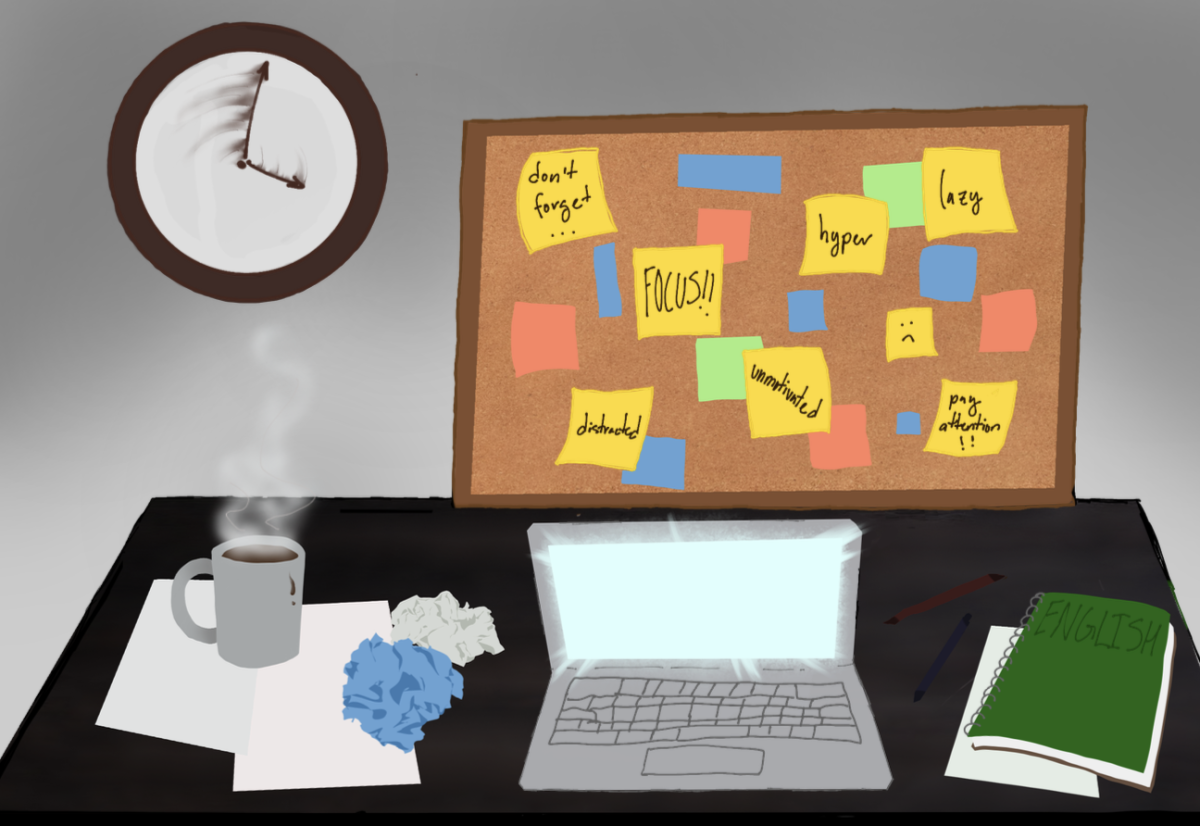
The popular focus on the hyperactive and impulsive aspects of ADHD leads people to see my messy room, missing assignments and forgetful qualities and automatically assume that I’m careless, not living with a disability. The truth is I care so much that starting can feel impossible.
As someone with ADHD, I have an interest-based nervous system, meaning my motivation and attention are driven by whether something is interesting, novel, challenging, urgent or one of my passions — which is a combination of factors that William Dodson, a board-certified adult psychiatrist, studied and identified as INCUP in recent years.
When I’m tasked to focus, switch between responsibilities and manage my time, my brain just sort of short-circuits and shuts down, making even small decisions feel impossible. Time is never consistent — whether I get ready in 10 minutes or two hours, I’ll still be five minutes late. Even my own mind is constantly in a race against itself, and my inability to regulate my emotions leaves me reacting in ways that are disproportionate to the situation.
On the outside it may seem like laziness and disorganization, but internally I’m living in constant battle with a brain that isn’t wired to society’s liking.
It isn’t easy having someone describe to you how your mind is impaired when it’s the only one you’ve ever known — when it’s the only one you’ll ever know. Suddenly, all of my struggles, accomplishments, personality traits and habits start to look like pieces of something that’s broken — something that needs to be fixed.
From there, it becomes hard to draw the line between where my ADHD ends and I begin.
But I know that these traits aren’t flaws in me as a person;, they’re simply brain signals trying to navigate a world that wasn’t made for me.
Recognizing this and trying to accept my disability as part of my identity hasn’t been easy. I want myself and the world to stop seeing ADHD as a flaw that needs to be fixed, because truthfully, it doesn’t make you broken.
It’s crucial that ADHD is no longer misrepresented or diluted, because the real change comes from showing the world our reality and demanding that they understand, not reshaping ourselves to be more palatable.
Unfortunately for me, no one is going to redesign the layout of sidewalks to fit my liking. But for now, I’ll keep walking with the annoying little tune in my head, as long as you can acknowledge that it’s there.
Never miss important news: every Monday, get a preview of what’s going on this week at Prospect, and what went down last week. To sign up for the Knight Notes newsletter, click here.