
















































“Keep your heart open.” The tagline for “Hamnet” has piqued my curiosity since its reveal: not because of its relation to the movie, but to its audience. What reads as a call for people to allow “Hamnet’s” emotions into their domain doubles as instructions for how to do so: stay empathetic, and keep close.
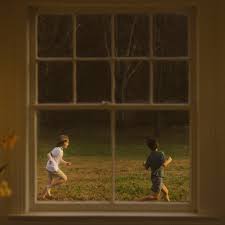
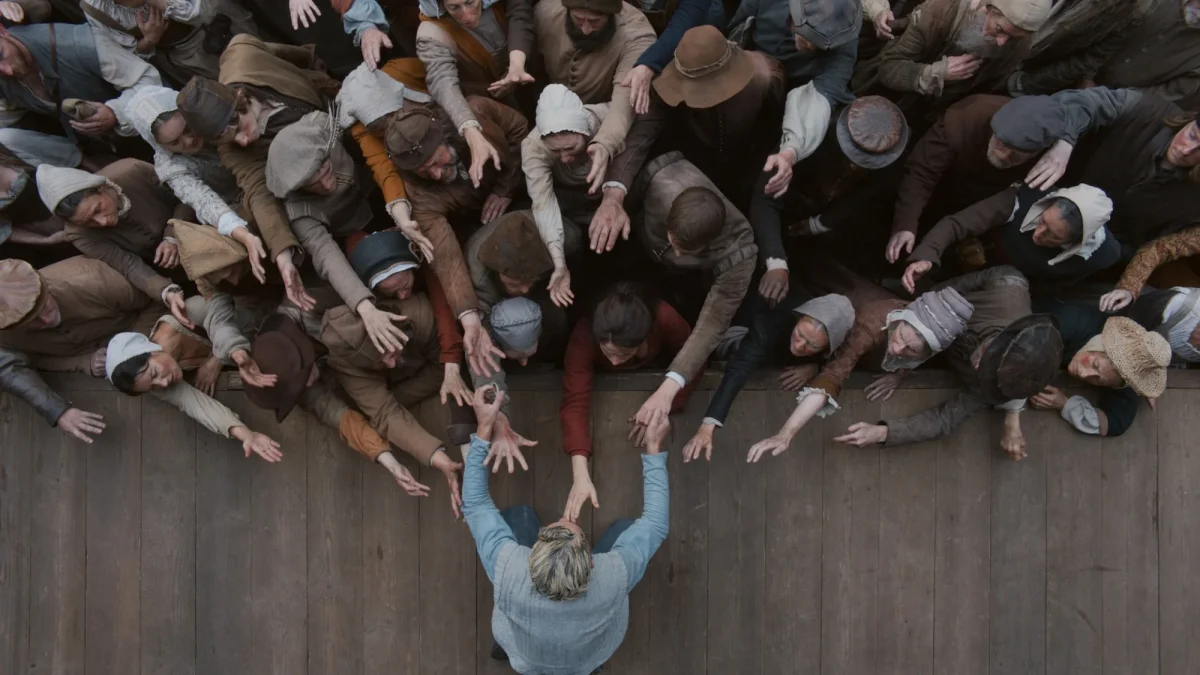
With an open heart, you can breathe in the natural world of “Hamnet.” You feel every sharp gasp, every trickle and every puddle; you graze every landscape alongside falcons, horses and dogs, riding beyond Chloé Zhao’s undiscovered countries. You see William Shakespeare blocked by camera-locked candlelight, unsure of where and when his next rhythm will find him. You watch his pregnant wife, Agnes, give birth alone by a cave in the forest fauna— just as unsure about her fate, but sure with her heart open.
Zhao’s film adaptation of Maggie O’Farrell’s novel “Hamnet” tells the story of William and Agnes Shakespeare, reimagining the inspiration for Shakespeare’s iconic play “Hamlet” as a semi-fictional tragic tale of love, birth and death. After the passing of the couple’s 11-year-old child, Hamnet, from the plague, Will and Agnes struggle with grief, sudden absences and closed hearts. It is only through art and the recollection of their lives that the story can move forward with them.
“Hamnet” is an emotional masterpiece. Despite what some critics are calling it on X (formerly Twitter) — “grief porn,” a “trauma dump” movie, “subtle as a sledgehammer” — they label it “tearjerker” as if it’s a stain on the movie: that, because it makes you cry, it’s overwrought. “Hamnet” makes you cry not for pity points but to make you fully empathize with what it’s saying. Zhao forces her audience into the ugly quiet of nature’s silences, immersing them in grief, heat and somberness. We find ourselves prone to the movie’s emotions, which then trigger our own. It’s elemental, punishing and cathartic: appealing to basic human feelings to further its message. Zhao makes you cry for a reason: to open your heart, and therein lies its untapped human power.
In her gut-wrenching, raw and often laborious performance as Agnes, Jesse Buckley is clearly gunning for an Academy Award. It will not be in the slightest for her to win Best Actress. Every distraught facial tear, every tick of unkempt sorrow and thought molds Agnes into a character beyond Zhao’s direction and O’Farrell’s prose. Buckley taps into something beyond the Shakespearean land where “Hamnet” resides, moving hearts towards unreachable depths and unfathomable emotional cues to humanize the otherworldly grief of a heartbroken mother.
Her co-lead, Paul Mescal, goes to similar extremes to portray William Shakespeare. He begins as an almost childish, immature writer and allows the grief of his child’s death to bend his character into a man of reflection, rawness and tranquility. There is a scene near the middle where Shakespeare recites Hamlet’s famous “to be or not to be” monologue, and Mescal’s distraught expression made me hear the words in an entirely different way. Shakespeare reading his own prose allows for a deeper connection to his work and gives audiences unfamiliar with his plays a chance to hear them in a tone beyond the stage: behind the actor, behind the words and behind the set to the man watching the product of his grief move forward— a play honoring his late son.
Before his death, the 11-year-old Hamnet shares a firelit scene with his ailing twin sister that was quoted by some crying mothers at my theater as “beautiful.” Jacobi Jupe, just 12 years old himself, plays Hamnet with a frightened childish innocence that makes his passing indescribably aching and devastating. His saddened cheeks show fear and longing in the end, but the joy we see in him when his father envelops him in the beginning almost distracts us from Hamnet himself and makes us reflect on just how brilliant Jupe is. When “Hamnet” takes us out of the story, it is to sob over our fascination with the titular character.
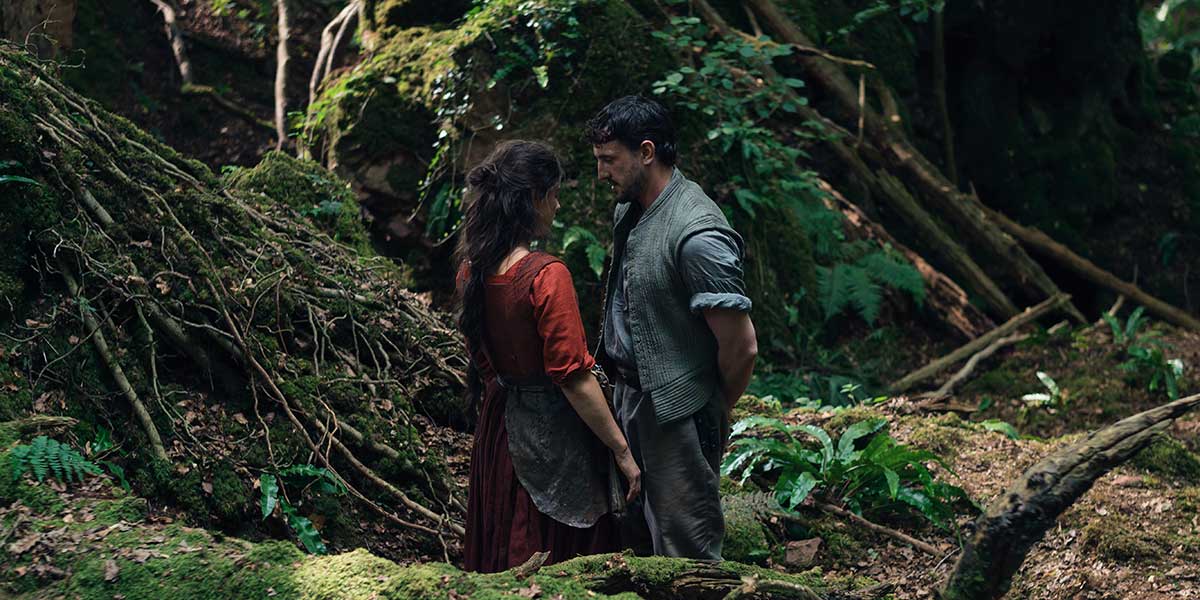
“Hamnet’s” visual language helps make this heart-wrenching tale even more gorgeously devastating. The countryside’s lush, dark green forests create an environment for Łukasz Żal’s cinematography to wade through. He focuses on the scarlet red of Agnes’s dress and the cool, collected blue of William’s tunic to create a contrast between the two lovers. Żal places them in dark, unforgiving environments to portray divides between the Shakespeares and the emotions that they feel apart from their partners. With his camera, he makes the dreary world of “Hamnet” almost dreamlike in its production.
And the compositions of acclaimed contemporary classical composer Max Richter glaze a story already filled with tear-inducing melodies in the form of Shakespearean words, gazes and screeches. While “On The Nature of Daylight” isn’t a track Richter composed specifically for “Hamnet” in particular, it drives the emotional core so flawlessly in the film’s final moments that I forgot it wasn’t brought into life for the scene’s message. Richter’s score works in tandem with Żal’s cinematography, and both play off Buckley and Mescal to build up central emotional facets to Chloé Zhao’s “Hamnet.”
I saw “Hamnet” twice in theaters because I was so moved by how its perfection made me feel. I cried at the title card, and I cried at the credits. To love “Hamnet” is to have kept your heart open, and I hope people open their hearts to its messages on love, loss and life this holiday season.
Never miss important news: every Monday, get a preview of what’s going on this week at Prospect, and what went down last week. To sign up for the Knight Notes newsletter, click here.