
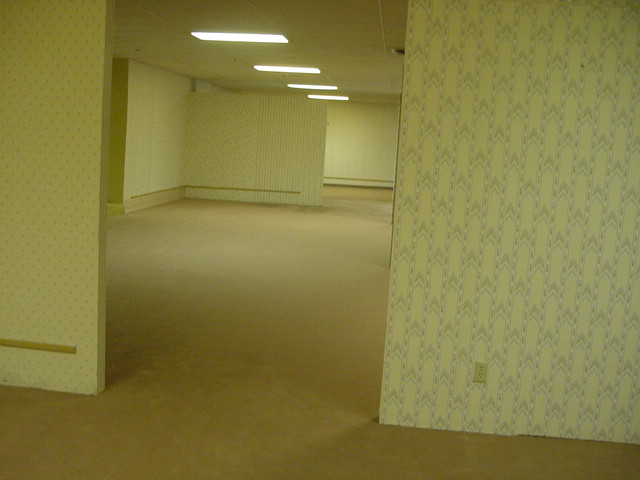






















































When District 214 (D214) conducted an assessment of the district’s schools in 2022, it became apparent that Prospect was not as pretty on the inside as it was from the outside. The massive boiler, which is meant to keep the school at a resonant temperature, is still the original one from when the school was built in 1957. The electrical transformer, which changes voltage levels to safely transfer electricity, is so old and dangerous that it is locked away in its own room and is closed off to personnel that aren’t trained professionals.
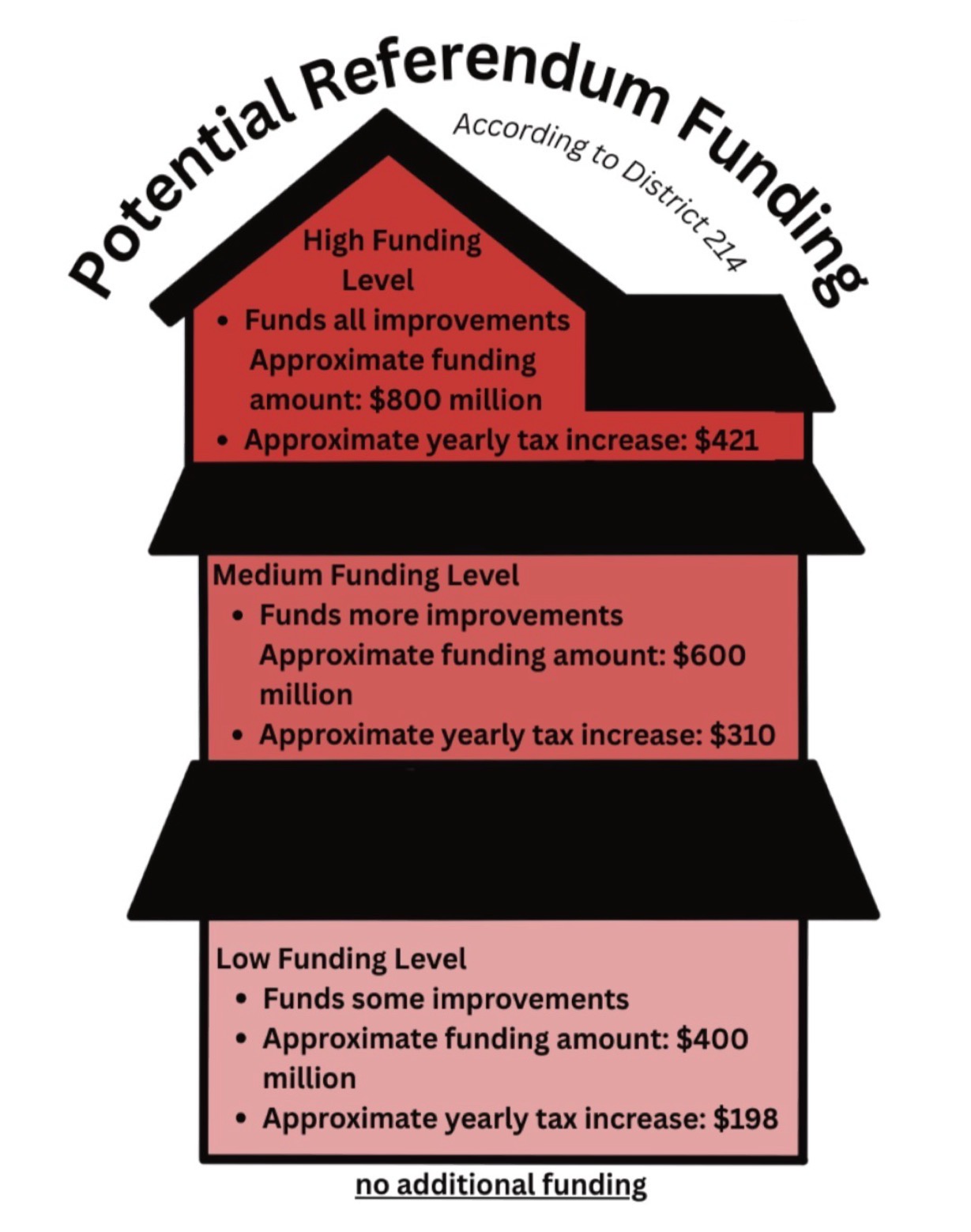
The assessment looked at everything from the quality of windows, lights and roofs, to the air conditioners and boilers. The assessment revealed that the estimated cost to make the necessary repairs was $850 million. With a cost that high, the district decided that they needed to begin the process of asking the community if they would like to have a referendum to address these concerns. If D214 decides to ask for a referendum, the vote would likely be held in November of 2026 or in April of 2027. There is no set amount of money being asked for yet, as the district is proposing three different levels of tax raises to the community.
“It’s not a matter of poor planning on anyone in the past. It’s just at a point where now we know what our buildings need, and the age of our buildings,” Superintendent Dr. Scott Rowe said. “The technology and system modernization have come such a long way that if we’re going to really make the improvements, we’ve got to do it in kind of a big way.”
Rowe pointed out that these are not cosmetic-related changes, but rather repairs that are essential to keeping students “safe, warm and dry.”
The reason for the steep price tag is attributed to how old and obsolete a lot of the school’s systems are, like the fire alarms. For an air conditioning system like the one at Buffalo Grove, it’s not as simply as replacing the silver rod that comes out the roof — it requires ripping out the entire piping system throughout the school. To fix even one of these systems in a single school can cost around $15 to $17 million.
“Even if we are able to dedicate $20 to $30 million a year [of the district’s current budget] … to just a single building, we wouldn’t be able to keep [all seven of our buildings] up and we’re [then] falling further and further behind,” Rowe said.
While there are a lot of categories that the potential referendum is broken into, the one that is of the most importance to Rowe is the mechanical portion of the assessment, which accounts for $200 million. This area would include fixing and updating air conditioners and boilers.
Additionally, he is concerned about some of the school’s infrastructure. Improving these areas would entail repairing roofs and replacing windows, which allows schools to keep students warm and dry.
However, for many in the Prospect community, this referendum comes at a bad time. Last year, District 57 passed an $85 million referendum, which according to the district, would raise annual taxes approximately $766 for a house valued at $400,000. On top of that, the Mount Prospect Park District also raised taxes due to the construction of a new water park. This increased taxes $195 for a similarly valued house, according to the park district. Outside of taxes, the economy has been struggling in addition to the recent 43-day federal government shutdown.
According to Rowe, D214 covers almost 70 square miles and is home to over 300,000 residents, and he is aware that each community is experiencing different economic conditions.
“While Mount Prospect may feel a little bit of that additional burden because of what’s gone on in the last year [with] the park district and Mount Prospect 57, the nice thing is that we are so big that [the] burden is spread out amongst a much larger chunk of the community,” Rowe said.
While some may be worried, community member Keli Stonitsch isn’t too concerned with the district’s idea. Stonitsch has had one child graduate from Prospect, two currently enrolled and one that hasn’t attended yet. Being with the school for so long, Stonitsch has truly felt supported by the district. While she acknowledges that money is tight, she also understands why the district has chosen to ask now.
“Money will be tight for everyone’s pockets, so this might be the right time to bring [the referendum] up just before people really start tightening their wallets and looking at spending,” Stonitsch said. “It’s not a great time ever to tell people you’re gonna have to pay more in taxes, but I think doing it now versus doing it next year is a better idea.”
With all of the concerns, Rowe is aware that the community may turn down the idea of a referendum. The district has a fail-safe: it’s fund balance. This money is set aside to deal with repairs or any other general costs that might come up. The district’s fund balance sits at around 47% of the district’s total budget, which puts the fund balance at about $170 million.
The district has been spending some of this money; however, they are advised not to go below 40% of the fund balance.
The limit on the fund balance is critical right now because of the technology problem that Cook County is having with mailing out tax bills for September. Those dollars from that second installment go to the district, but the delay is forcing the district to spend its fund balance in cash for things that it normally shouldn’t have to pay, like teacher pay, electrical bills and general expenses to run the buildings.
“A lot of people think, ‘If you have $170 million, spend that.’ If we do, there are some serious consequences when the rainy day comes, and this is that rainy day of Cook County [because it] has a history of being late on getting the property tax bills out,” Rowe said.
Therefore, using this money to fund the referendum has been a topic of discussion for Rowe.
“We’ll do our very best to ensure that there’s no impact on the student experience [if a referendum is not passed],” Rowe said. “Like if our air conditioning systems start to break down, [it would be like when] we had to cancel school at Buffalo Grove in recent years because the air conditioning system failed on a 100 degree day.”
With how crucial the funding is and the time at which D214 is approaching the community, Rowe says that the district is being very open about the process because they really want to emphasize community engagement. They are curious to know what is most important to the community, which is why they have done surveys asking people which aspects they care most about and how much money they are willing to spend.
So far, almost 600 people took the phone survey and over 2,100 people took the online survey. According to the survey, the district has a 86% favorability rating among the community.
Rowe feels that these results cement the support that the district receives from its communities.
“Our schools are very important to this community. I hope you feel that as a student, our families in this school district, they really do love the school district, they really value education and they really value what we’re providing for your experience,” Rowe said. “People want to have the very best for our kids, and … a great school district translates to high property values.”
When Stonitsch looks at it, she is hopeful that people will come around and support their district. She points out that the district is as award-winning and successful as it is because of the community that supports it, and she believes that a whole lot of good and opportunities could come from this.
“It’s important for [D214] to have successful students and provide a lot of opportunities, and I think the district is [extremely successful]. They really want to stand out within the state and the country and I think that’s why people choose this school district,” Stonitsch said.
Rowe also wants the community to continue to interact with the district and hopes that the community will come together, even with everything that’s going on.
“This is not my school district, this is the community school district,” Rowe said. “The buildings belong to the community. They pay taxes that support everything that we do.”
This story originally ran in Volume 62 Issue 3 of the printed Prospector newspaper under the headline “D214 considers referendum.”
This is MountProspectNews.org, the home of free community news created by Prospect High School student journalists. To switch back to our school news site, ProspectorNow.com, click here.
To sign up for our monthly community newsletter covering all things Mount Prospect and Arlington Heights, click here. It really helps us out.