











As an autistic person, I can tell you that being me comes with plenty of disadvantages: cracking my knuckles constantly, laughing when I’m not supposed to, calling a news reporter the black sheep of his family on live television as a fourth grader (I said I was sorry, Mr. Hansen … please give me that letter of rec).
You know … the usual.
But there is one privilege I can say every autistic in the U.S. got that the rest of the world was deprived of, one ultra-groovy perk that finally confirms us Tylenol-Americans are undeniably the coolest cats around: we got to be almost put on a national registry to find a
way to eradicate us this April, and you loser non-autistics didn’t.
So … ha!
Nerds!
Take that!
As reported by CBS News on April 22, Director of Health and Human Services Robert F. Kennedy Jr. tried to spearhead the creation of a national registry of autistic people that (if it hadn’t been aborted due to overwhelming backlash) would have taken data from our genomics, pharmacies and smart watches in an attempt to figure out autism’s cause.
Why would they want to know autism’s cause, you wonder? For the same reason people want to know the source of a leak or the abandoned dog poop in their front yard: so they can know in which direction to run at the problem with a wrench and hit it until it stops moving.
The government doesn’t want autism to exist.
The funny thing about not wanting autism to exist, though, is you just can’t do it without not wanting autistic people to exist either.
And while on one hand, I would rather people like me be allowed to be born, on the other hand, I kinda get it, RFK.
I used to want to cure me too.
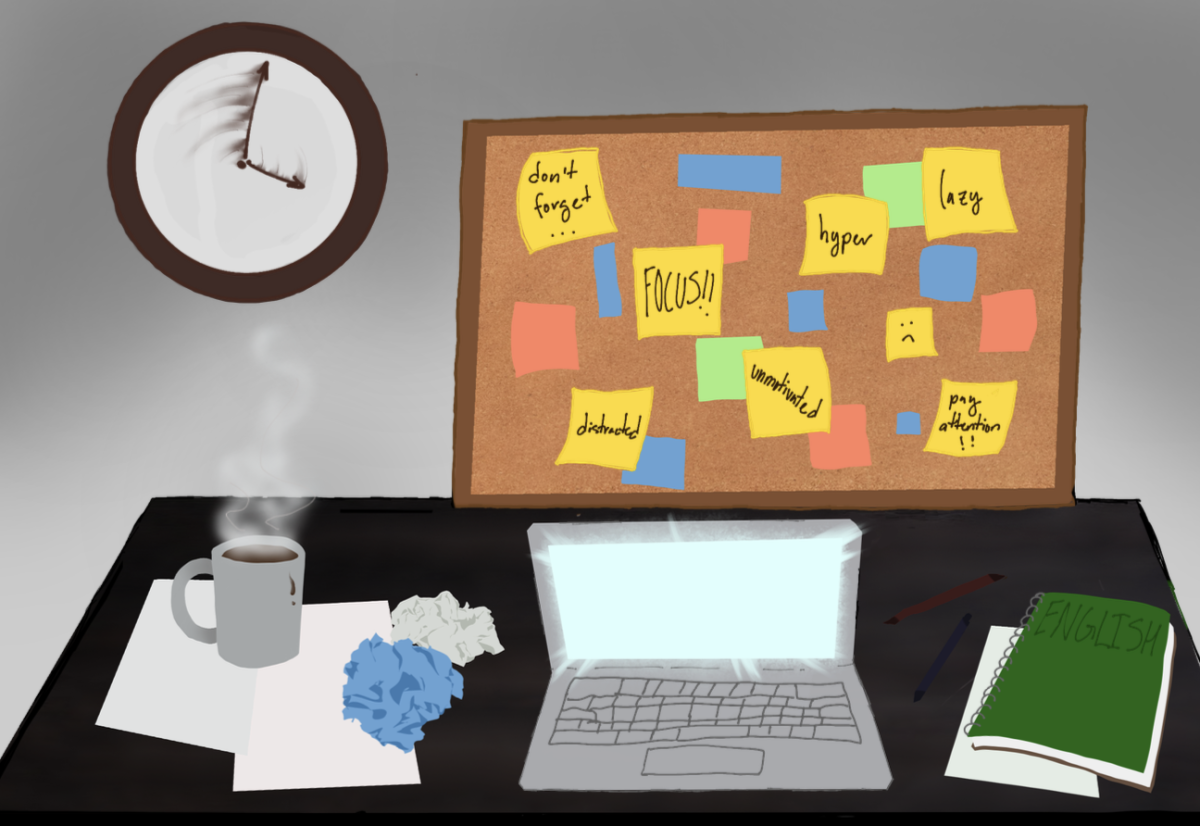
I grew up a quick reader with a running mouth. I read alone during recess, swam in scarves and social worker visits, wore sloppy eyeliner too early and learned to ask people questions about themselves too late. I grew up and figured out how to look at someone’s face when they were speaking, but even when I got friends and stopped getting bullied, an ugly feeling lingered on.
I didn’t just think I was different — I thought I was wrong.
Not wrong like an ugly duckling. Wrong like a tumor. Wrong like a failed experiment. Wrong like a doll with the face paint half off.
I was 13 years old and I was a cosmic mistake.
People wonder why I and other autistic people care about our diagnoses so much. The truth is, it’s not just so we can make autism jokes (though I do admit, that takes up a good forty percent). It’s so we know we’re not defective human beings.
There is nothing that proves me human to myself more than having a brain disabled in a way humans have been disabled since humans have existed. And putting a name to why I am the way I am gave me access to a whole community of people like me — a whole new set of tools to navigate this alien world.
In the space of a few seconds on a doctor’s Zoom call at age 13, I learned I was a person. In the space of a few seconds on a
doctor’s Zoom call at age 13, I started down a path of self-awareness that is much of the reason I am surrounded by friends who stand by me despite my disability today.
And it is true: autism is a disability. People are scared of autistic people using that word. They think it’s too negative, too mean. But if you see me calling myself disabled as a symptom of low self-esteem, the problem isn’t with me — it’s with your perception of disability as an insult.
Autism makes you less able or unable to do certain things. It makes me less able or unable to do certain things. That’s, quite literally, what the term disability means. And no matter how normal I may manage to present myself, the list of ways it affects me is more than a single bullet point reading “CLINICAL DIAGNOSIS: A little bit wacky.”
I am still picked last for teams, excluded from group photos, unheard when I call for others’ attention, cast as the one who walks on the grass and stares at the unquiet night as companions shriek with laughter on the sidewalk next to me. I don’t always notice when I’m hungry or sleepy or in pain, I can’t sense taste as much and I can’t smell at all. At 6 I burned my hand after purposefully puttingit on the stovetop; at 8 I wrapped the same hand around a lightbulb, white-hot; and when I broke my arm in fifth grade, no one believed me because I wasn’t crying hard enough.
For me, looking into someone’s eyes is like staring into the sun.
But no matter how hard it can be to live in a world that isn’t built for you, I wouldn’t give up my autism. Because if I gave up my autism, the person left behind wouldn’t be me.
Autism isn’t an uncontrollable wart or a Barbie heel halfway up your nose. It’s not rocks in the pockets of a drowning man or a pebble in the world’s shoe. It’s a way of being. It is woven into our personalities, our perceptions, our relationships — every bit of ourselves and our lives.
It is the way we exist in the world — 61.8 million people (according to a 2021 Global Burden of Disease Study) and I.
When some talk about why autism shouldn’t be “cured,” they laud the benefits they believe it brings. They bring up Einstein, Mozart, Temple Grandin. And yeah, maybe autism can help some people become incredible geniuses. Or maybe not. But we should be asking ourselves: does that really matter?
I don’t believe autistic people should be kept around because of any contributions to society we might make. I don’t believe autistic people should be kept around because some of us can compensate for our disabilities with astonishing feats of intelligence and skill like we do on TV or in movies.
I believe autistic people should be kept around because we are people.
Because our perceptions matter.
Because our culture matters.
Because we have existed alongside you for too many millions of years to be wiped out now for being inconvenient.
Today, I’m a tight-jawed awkward talker with knuckles that crack like soda tabs and a penchant for skin-picking. I let loose, I stumble, I swing my arms as I stroll and sleep sunny-side up so every morning my back is to the sky. I see the girl I used to be peeking out between the curls she had that I only get post-shower, short-lived as spring through the steam in the mirror, and I ask her: Can you believe this?
I can’t get every joke. I never learned when to keep a secret. I don’t know what to do with my arms.
But I can’t remember the last time I ate lunch alone.
When my people-packed extracurriculars are over, I cycle home center-road after dark, wheels whizzing beneath an undercooked night, and stretch free my arms to catch the clouds.
The stars are out. My hands aren’t needed. No matter what, there will always be those who can love me.
I am 17 years old and I am extraordinary.
Never miss important news: every Monday, get a preview of what’s going on this week at Prospect, and what went down last week. To sign up for the Knight Notes newsletter, click here.