































































Senior Sofia Kielczewski has missed a full week of school every January of her whole high school career. Although that may sound shocking, it isn’t simply an extended winter break for her — it’s a week full of practice and competition.
Kielczewski has been ice skating since fourth grade, and she’s become very skilled in the sport. While some of her teammates at Glenview Blades rotate between competitions, her dedication has allowed her to secure a full time spot during performances.
“I can’t miss a competition … if I did, I would lose my place,” Kielczewski said.
Although missing a full week of school, along with a few Thursdays and Fridays prior to weekend competitions, may seem like a lot, Kielczewski believes she’s still learning important skills.
“[Ice skating] is pretty important to me. It’s taught a lot about communication and working with other people. I really enjoy it,” she said.
Despite her absences, Kielczewski remains in positive standing with her teachers and continues to receive good grades.
“Perfect attendance isn’t what makes a student amazing,” she said. “It’s about actually putting in the work.”
First year Prospect Dean of Students Jesus Zamudio believes ensuring students have the proper mindset to attend school is an area of importance for staff members.
“Obviously the first and most important thing is the student’s health,” Zamudio said. “It’s [important for] us to partner with the family and make sure we’re not pushing too much, but also [to make] sure students are still getting an education.”
The truth is, though, perfect attendance isn’t a reasonable expectation to have for high schoolers. It’s still a wonderful goal, and certainly admirable when achieved — but high school students often have very complicated lives, and when extenuating circumstances lead to imperfect attendance, they should be met with understanding. Kielczewski believes that her teachers have shown compassion towards her circumstances and they encourage her to continue working hard in and out of the classroom.
Many juniors and seniors are exploring different colleges or potential careers, and sometimes that requires missing a bit of school.
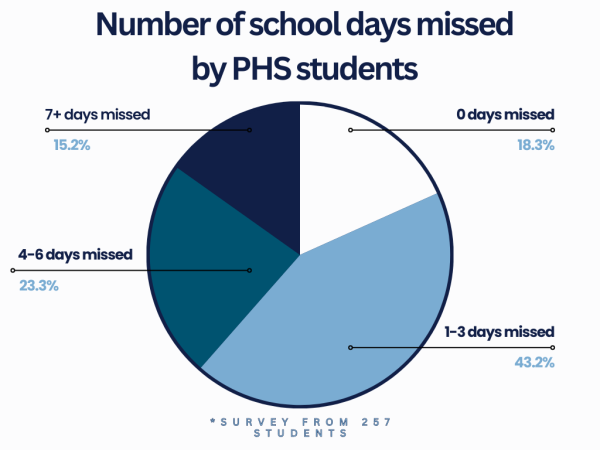
That also doesn’t mean skipping school is a good thing, and the facts don’t lie; better attendance often leads to more success. Zamudio offers a good perspective on this dilemma.
“You set goals so that when you fall short of them, you’re still in an excellent spot,” Zamudio said. “[Perfect attendance] is doable, but even if you fall short of that, you remain in a good position.”
Knowing that being present in class often leads to better performance, there are a few ways Prospect “subtly” incentivizes students to show up everyday. According to Zamudio, every month members of Prospect’s staff bring the candy cart to students with the highest levels of attendance among their peers, and privileges like open campus and parking passes are only given to students who regularly show up. Although well-intentioned, research has shown that positive incentives for attendance can actually backfire.
Professor of Public Policy at Harvard University Todd Rogers took a survey of 15,000 students between sixth and 12th grade and found that awards can lessen a student’s motivation to show up daily.
“It appears these awards convey to students that they attend school more than their classmates, so they are licensed to attend a little less,” Rogers said to Education Week.
A strong push for perfect attendance can also send a poor message by encouraging students to come to school when ill.
“1,000% do not come to school when you don’t feel well,” Kielczewski said. “Then you get everybody else sick.”
Obviously, the school needs to encourage students to show up. But a better approach would be to let the results speak for themselves. Posters, emails and catchphrases like “Every Knight, Every Day” don’t confront the nuances of why students miss school. Although Prospect seems to understand that perfect attendance isn’t achievable for everybody, their methods of encouraging students to show up regularly sends a mixed signal. If they were to focus more on persistence, reaching out for help and hard work, kids would be more likely to understand the meaning of “Every Knight, Every Day” as something more than perfect attendance — not as much a policy, rather a culture the school strives for.
Kielczewski does exhibit the traits of a dedicated student despite her lack of perfect attendance. She continues to reach out to her teachers in order to stay engaged with her studies, and persistently works to keep her grades up. Attendance incentives miss the hard work students like Kielczewski demonstrate in order to excel in school while outside the classroom.
I absolutely agree that students should strive to attend school regularly. When the target is high, you aim high — so even if it isn’t a bullseye, you’re ahead of expectations. At the same time, I believe it’s important the school respects the lives of students outside of Prospect’s walls, and that they understand that falling short isn’t always a failure of the student — especially when a student’s mental or physical health is at stake.
“There [are times] when I’m laying in bed and I know there’s no way I could go to school,” Kielczewski said. “Sometimes I just need a break.”
Never miss important news: every Monday, get a preview of what’s going on this week at Prospect, and what went down last week. To sign up for the Knight Notes newsletter, click here.