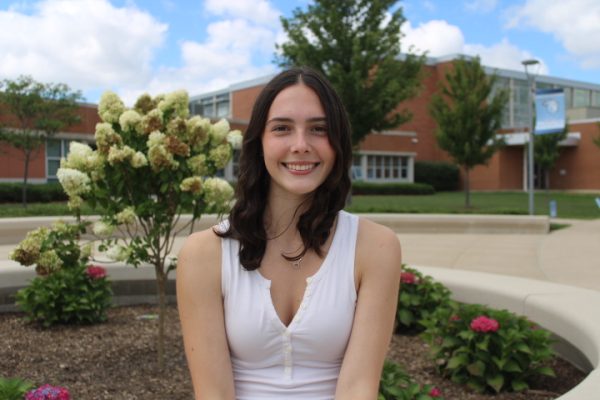

















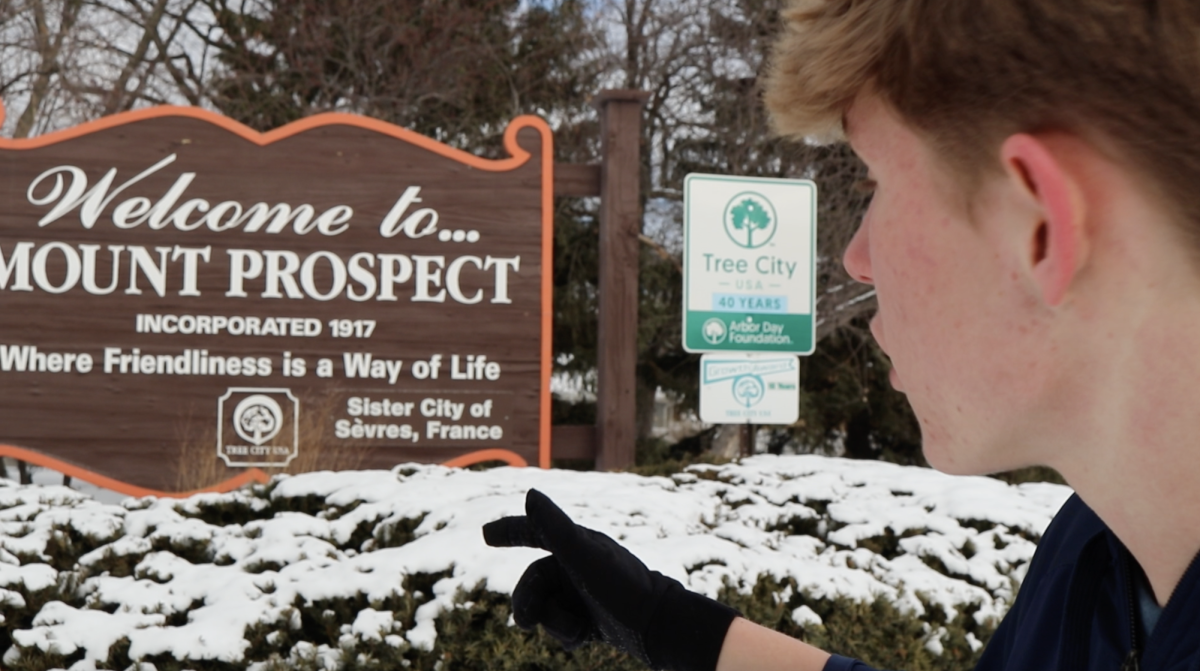



























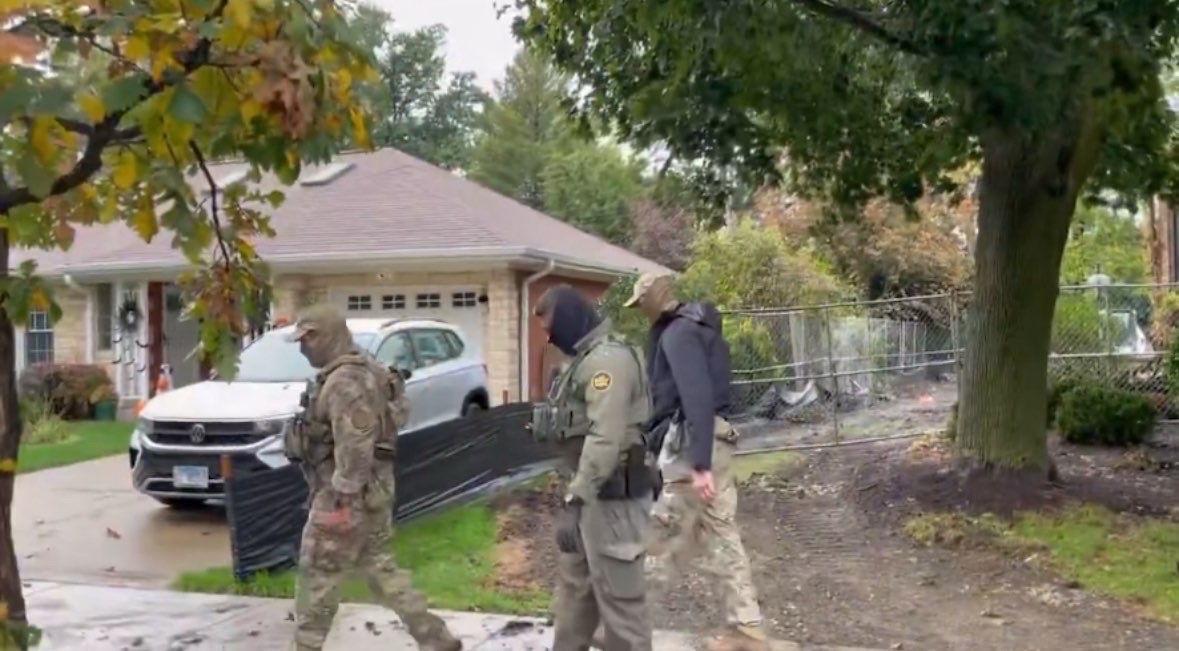
Senior Zoe Fisher, like most teenagers, enjoys spending her weekend mornings sleeping in. Instead of her usual alarm clock, Fisher was awoken to loud noises from outside her house on Oct. 19. Since her family home was under construction, she thought nothing of it and continued on with her morning, until her brother suddenly interrupted her.
“Zoe,” he said, “ICE is in our backyard right now.”
Immigration and Customs Enforcement (ICE) agents conducted a search in Mount Prospect after a detainee escaped from their custody, according to Journal & Topics.
For once, these headlines weren’t about some distant city, they were about something that was happening on the same streets I drive down every day.
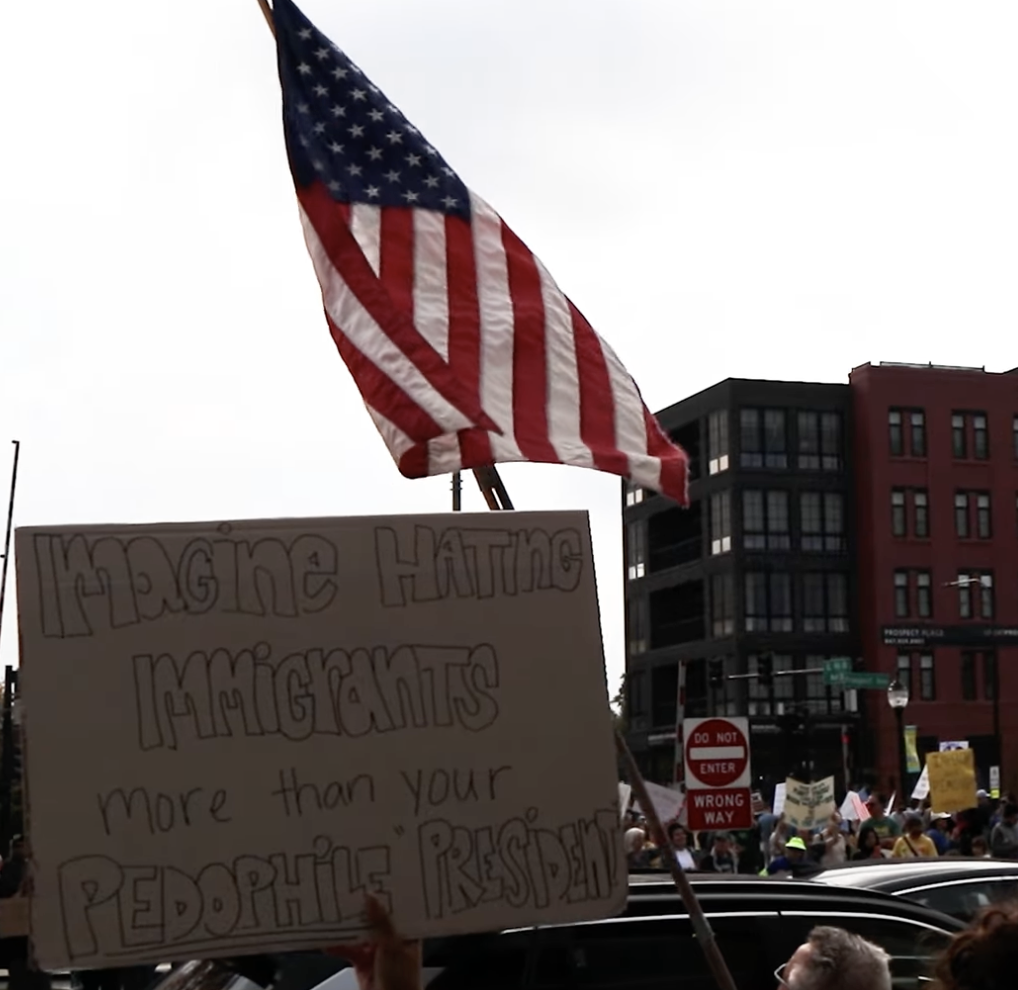
This operation was part of President Donald Trump’s “Operation Midway Blitz,” which is intended to “target the criminal illegal aliens who flocked to Chicago and Illinois,” as stated by the Department of Homeland Security.
Taking off in early September, the operation has so far resulted in more than 3,000 immigration arrests in the Chicago area, as reported by PBS News.
Numbers like these are usually shown as proof of success, but what they don’t show is the distress caused in places like Mount Prospect to get there.
What happened in my own town made it clear to me that immigration enforcement isn’t just a national policy debate — it affects how safe people feel in their homes and neighborhoods.
Immigration law enforcement is not new, but a recent Supreme Court decision has significantly changed how ICE can conduct stops. In the case Noem v. Vasquez Perdomo, the Court issued a 6–3 stay on a lower-court order that had barred ICE from making stops based solely on race, language, location or employment.
That means that ICE may now rely on those factors when deciding to detain someone. I understand that this is an effort to improve safety, but something feels wrong to me knowing that my classmates or their family members feel more like suspects than neighbors, especially when it’s because of something they can’t control, like how they look or sound.
As these powers expand, communities like mine are left to feel their impact. When armed agents appear suddenly in residential areas — running through backyards, waking up families and stopping people based on suspicion alone — the result isn’t confidence in safety; it’s fear.
That fear was felt throughout Mount Prospect. Residents David and Courtney Thomas witnessed that same sense of confusion ripple through their block during the Oct. 19 search.
Hearing stories from others like the Thomases made me realize that this situation was bigger than the mishap in Fisher’s backyard: it was an entire neighborhood suddenly unsure what was happening and why.
“The concerning part is I don’t think they made our neighborhood any safer being there,” David said. “If the Mount Prospect Police Department (MPPD) were doing something similar, we all would’ve felt safer. We all would’ve talked to them if they needed us, we would’ve all seen their faces, [and they would’ve had] a record of it and published it … If [the police were to] operate like [ICE], why would anyone support or respect this because they’re not cooperating with the community?” David said.
Both Thomases and Fisher mentioned that there was no clear explanation to what had really happened that day or who the detainee was.
“The agents were telling everybody separate things,” Fisher said. “At first, they told us that [the detainee] was a dangerous criminal, … but they told other people he was a child predator.”
The lack of clarification of who this person was left neighbors feeling confused, with some, like Fisher, questioning if the officers even knew who they were looking for. When the operation ended, people still didn’t have answers.
“[The ICE agents] just all disappeared and went away and we’ll probably never know what happened,” David said. “It was very strange.”
When immigration officers are running through neighborhoods, things should not be this confusing and inconsistent. Without a simple report or safety notice sent to residents, it doesn’t give people a chance to protect themselves or properly react. Parents don’t know that, while their kids are playing outside, there could be an armed officer just a block away.
ICE might argue that this limited communication is necessary during high-stress searches, but that reasoning doesn’t ease the anxiety experienced by people living here.
The fact that my own classmates could feel unsafe walking down the street, especially in a place with a reputation for safety like Mount Prospect, is shocking to me. Being white, I never have to experience this fear, but why do I get to live with that comfort? I always assumed the feeling of safety and protection was a guarantee for everyone, not just a lucky few.
Immigration operations like this one in Mount Prospect have shown me that safety is not just about enforcing the law, it’s also about trust, communication and ability to feel secure in your home or neighborhood. Until these operations include clear communication and transparency, the promise of safety is going to feel out of reach for many, even in places that have long considered themselves safe.
Fisher’s morning may have eventually returned to normal, but the uncertainty created in our community lingers.
Never miss important news: every Monday, get a preview of what’s going on this week at Prospect, and what went down last week. To sign up for the Knight Notes newsletter, click here.
To sign up for our monthly community newsletter covering all things Mount Prospect and Arlington Heights, click here. It really helps us out.